Test and select a set of sorbents (synthetic, natural and wastes) with appropriated formulation and characteristics suitable for Post-Combustion CO2 capture /Ca-Looping CO2 capture in terms of reactivity decay (calcinationcarbonation cycles) and carbonation capacity for sustainable operation in the cement industry (pursuing the intial work with CIMPOR in FCT-funded project CaReCI).
Design and assembly of a concentrated solar power heating system in a bench scale rotary oven calciner at SECIL lab for a lower energy penalty during sorbents calcination tests.
Model and design scaling-up for a Pilot-Scale Unit.
Development of advanced materials with potential properties for CO2 conversion into synthetic natural gas using realistic conditions, with tests performed in thermal and plasma units.
This project is meant to be an innovative and circular alternative for reducing carbon dioxide emissions in cement industry.
Green Hydrogen is essential for feasibility (wind, photovoltaic)
Full techno-economic evaluation of “carbon chemistry” solutions for the cement industry.
Synthesis of new Polycarboxylate Superplasticizer with a molecular structure designed to enhanced properties
Synthesis of different structures
Benchmarking approach
Iterative methodology

DISCOVER is a four-year European project dedicated to transforming the construction industry by harnessing emerging technologies to accelerate the twin transitions of green sustainability and digital transformation
The project’s key points are:
Advancing robotics in pre-demolition inspection and identification
Unlocking the potential of AI and BIM-based tools for sustainable deconstruction
Transforming demolition practices for optimal resource recovery
Increasing direct material reuse in construction
Rapid and autonomous on-site material identification methods
Learn more about the project here
Partial replacement of clinker by calcined clays and limestone filer:
Evaluation of the pozzolanic characteristics of clays available in Portugal.
Optimization of characteristics of the cements produced with calcined clays and limestone filer.
Industrial production of the selected new cements.
Technology demonstration in full scale with durability evaluation of concrete structures produced with the new cements, testing a few structures with field exposure sites (e.g., seawater, salts, sulphates).
A consortium of several partners complementing each other and covering the full chain of cement sector, from product development to application and certification, are crucial for the full demonstration of the technology.
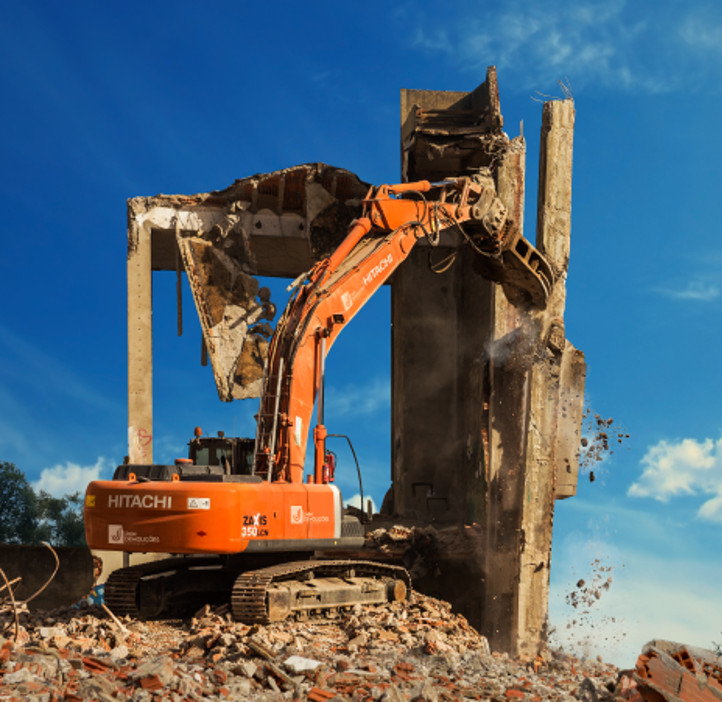
To enhance CO2 capture by maximizing carbonation and the CO2 content incorporated in the recycled concrete fines (RCF) and recycled concrete aggregates (RCA), with a view in technology scaling-up feasibility in the industrial environment, e.g., looking at the feasibility of installing a (re)carbonation unit at a cement plant that would use a fraction of flue gases from the kiln’s main chimney stack (recycled concrete fines + CO2 = cementitious material (re)carbonation of RCF).
To contribute to EU CO2 emissions mitigation targets and to reduce dramatically the amount of C&DW being landfilled with the promotion of circular economy that would require pushing for updated national regulations for C&DW (re)carbonated artificial aggregates use in construction.
To contribute to reducing concrete buildings carbon footprint taking a full life cycle perspective into account.
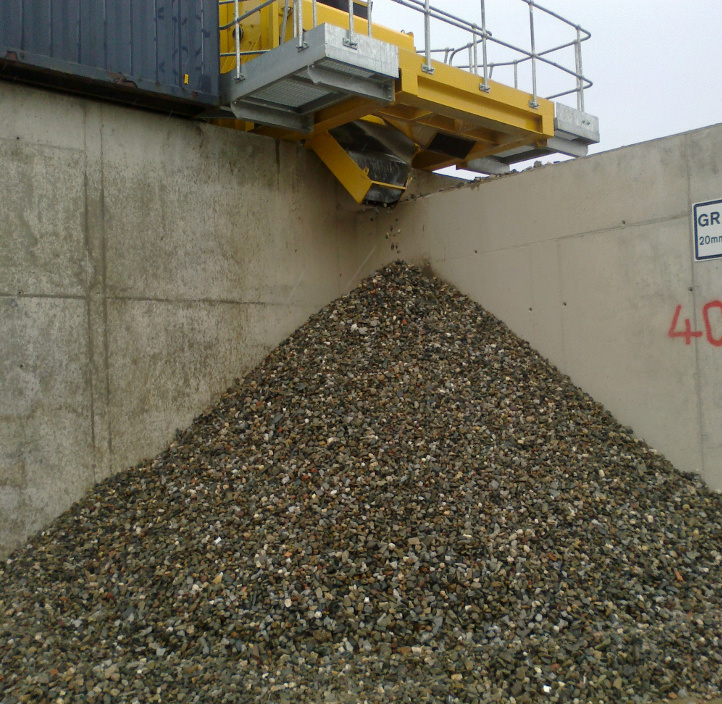
To produce aggregates for the manufacture of mortars and concrete, with partial recycling of materials, optimizing logistical operations, in order to reduce economic and environmental impacts and to contribute for a circular economy in the construction sector.
This study would consider both the use of carbonated and non-carbonated recycled aggregates and performance comparisons when used in concrete.
This Life Cycle Assessment (LCA) / Life Cycle Inventory (LCI) of cement industry is meant to be a tool to set the overall principles to evaluate every new project / solution to be developed under the C5Lab.
LCA will be used to design and promote sustainable materials and technologies that may improve the environmental performance of products through their life-cycles.
The project should consider a cradle-to-cradle approach that would take into account the use, end-of-life and recycling (upcycling and downcycling) phases of its products, where aspects of durability, energy savings, avoided CO2 emission, concrete carbonation, etc., would also be part of the full equation.
Copyright © 2025 C5Lab